

Share this article
Key takeaways
- Meta Pixel tracks supported customer activity through the browser, while CAPI sends supported events from the server or backend.
- Pixel and CAPI can work together, but event deduplication is essential when both report the same conversion.
- COD makes attribution more complicated because an order placed is not always an order delivered.
- ROAS is more useful when compared with actual orders, costs, fulfilment outcomes and estimated profit.
- PQCommerze connects Meta tracking and advertising analytics with orders, revenue and ecommerce operations.
If you run Facebook or Instagram ads for an ecommerce business, you have probably heard terms such as Facebook Pixel, Meta Pixel, CAPI, server-side tracking, Purchase events and ROAS.
They are all connected to one basic question: what happened after someone clicked your ad? Did they visit a product page, add something to their cart, begin checkout or place an order? And most importantly for an ecommerce business, did that advertising spend actually generate revenue?
Meta Pixel and the Meta Conversions API help businesses answer those questions. For Bangladeshi ecommerce merchants, tracking can be more complicated because many businesses still depend heavily on cash on delivery, courier fulfilment and orders that may later fail or be returned.
Understanding the difference between browser-based tracking and server-side conversion tracking can therefore make a significant difference when evaluating Facebook and Instagram advertising.
What Is Facebook Pixel?
Facebook Pixel—now officially called Meta Pixel—is a piece of code installed on a website. It helps Meta understand what visitors do after interacting with an advertisement.
A store can use Pixel events to record activities such as viewing a product, adding a product to cart, starting checkout, completing a purchase and submitting a lead.
That information can then be used for advertising measurement, audience creation, retargeting and campaign optimization. Meta Pixel remains widely used by ecommerce stores in Bangladesh. Store Leads currently reports more than 16,000 Bangladesh ecommerce stores using Facebook Pixel, with WooCommerce representing the majority of those stores.
How Does Meta Pixel Work?
Pixel primarily works through the customer's browser. Imagine someone sees your Facebook advertisement for a shirt, clicks the ad and visits your website. The Pixel can send supported events back to Meta as the customer moves through the store.
Meta may receive information that the visitor viewed the product, added it to the cart, started checkout and eventually reached the purchase confirmation page. This gives Meta additional information about what happened after an advertisement was shown or clicked, and can help its advertising system understand which users are more likely to perform similar actions.
The Problem With Browser-Only Tracking
Browser tracking is useful, but it is not perfect. Modern browsers, privacy controls, cookie restrictions, ad blockers and device settings can reduce the information that browser-based tracking can observe.
Bangladesh-focused ecommerce and marketing guides increasingly recommend using Meta Pixel together with Conversions API rather than relying only on browser tracking. Incomplete tracking can make your advertising reports look different from what is actually happening inside your store.
For example, your ecommerce dashboard may show 100 orders while Meta Ads Manager attributes significantly fewer purchases. That does not automatically mean Meta is wrong or that your store is wrong; it may mean some conversion signals never reached Meta.
What Is Meta Conversions API?
The Meta Conversions API, commonly shortened to CAPI, sends supported conversion information from your server or backend directly to Meta. Instead of depending entirely on the customer's browser, some events can be generated from the commerce system itself.
For example, when an ecommerce system records a confirmed order, the backend may send a supported Purchase event to Meta. This creates another source of conversion information alongside the browser-based Pixel.
Bangladesh-focused CAPI guides frequently emphasize this server-side approach for ecommerce stores using Shopify, WooCommerce and custom platforms.
Facebook Pixel vs Meta CAPI
| Area | Meta Pixel | Meta Conversions API |
|---|---|---|
| Data source | Customer browser | Server or backend |
| Requires website code | Yes | Backend integration |
| Affected by browser restrictions | More | Less dependent on browser |
| Tracks website activity | Yes | Supported server events |
| Useful for Meta Ads optimization | Yes | Yes |
| Can work together | Yes | Yes |
Pixel and CAPI are not necessarily alternatives. They can work together. A common ecommerce setup uses both: the browser Pixel records supported activity happening on the website, while CAPI sends selected information directly from the backend.
Why Use Pixel and CAPI Together?
Using both provides Meta with more conversion signals than relying on one method alone.
Suppose a customer visits your store. The browser successfully sends a Purchase event through Meta Pixel, and your backend also sends the same purchase through CAPI. Without proper configuration, Meta could count the purchase twice.
This is why event deduplication matters. The browser and server events can share an identifier that allows Meta to understand they represent the same business event rather than two separate purchases. Correct event IDs and deduplication are essential for reliable reporting.
Why CAPI Is Especially Relevant for COD Ecommerce
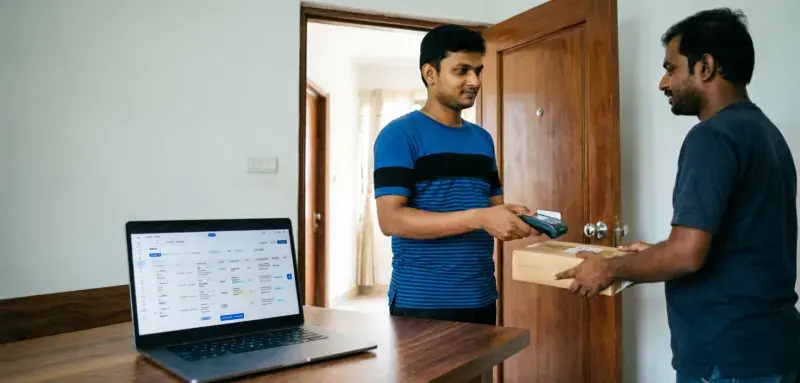
Cash on delivery creates an additional tracking problem. Imagine a customer clicks an advertisement today and places a COD order. From the website's perspective, that may look like a purchase—but the business has not actually received the money yet.
The parcel may later be delivered successfully, rejected by the customer, cancelled, returned or failed by the courier. If every newly created COD order is treated exactly like a completed sale, advertising reports can overstate the true business result.
A merchant may want to separately understand:
- Orders created
- Orders confirmed
- Parcels dispatched
- Orders delivered
- Paid orders
- Returned orders
The correct tracking strategy depends on how the business operates. For a COD-heavy business in Bangladesh, connecting advertising data with actual order and delivery outcomes can provide a more realistic picture than relying only on a checkout confirmation page.
What Events Should an Ecommerce Store Track?
Typical Meta ecommerce events include:
ViewContent
A customer views a product or important page.
AddToCart
A product is added to the customer's cart.
InitiateCheckout
The customer begins checkout.
Purchase
A purchase is recorded according to the store's configured tracking logic.
These events help Meta understand the customer journey from initial interest to conversion. Other events may also be useful depending on the business. The important thing is not to send as many events as possible; it is to send accurate and meaningful events.
Pixel Tracking and Real Business Revenue Are Not the Same Thing
One common mistake is looking only at Meta's reported ROAS. Imagine Ads Manager reports ৳100,000 revenue from ৳20,000 advertising spend. That appears to be a 5× return on ad spend.
But suppose many of those orders were COD orders that later failed. After delivery results are considered, perhaps only ৳70,000 was actually delivered. The business outcome is different from the initial advertising report.
This does not make Pixel or CAPI useless. It means advertising data becomes more useful when it is connected with actual ecommerce operations.
What Is ROAS?
ROAS means Return on Ad Spend. It compares revenue attributed to advertising with advertising expenditure.
For example, if you spend ৳10,000 on ads and those ads generate ৳40,000 in attributed revenue, the reported ROAS would be 4×.
ROAS is useful, but ecommerce merchants should avoid looking at it in isolation. A campaign may generate high revenue while also producing large discounts, expensive products, high courier costs, high return rates or low margins. A strong ROAS does not always equal strong profit.
Why Ecommerce Merchants Should Connect Ads With Orders
The most useful advertising question is not which ad received the most clicks. It is which campaign generated valuable orders for the business.
A connected ecommerce system can compare advertising activity with operational information such as:
- Orders
- Revenue
- Delivery outcome
- Product cost
- Discounts
- Estimated profit
That allows merchants to evaluate Meta Ads using business results rather than advertising metrics alone.
Facebook Pixel and CAPI With Shopify and WooCommerce
Both Shopify and WooCommerce are commonly used by ecommerce businesses that advertise through Meta. Shopify provides integrations that can connect stores with Meta's advertising ecosystem, while WooCommerce merchants commonly use plugins or other integrations to configure Pixel and CAPI.
Regardless of platform, merchants should verify:
- Which events are being sent
- Whether Pixel is firing correctly
- Whether CAPI is working
- Whether browser and server events are deduplicated
- Whether purchase values are accurate
- Whether currency is correct
- Whether test transactions appear as expected
Simply installing a plugin does not guarantee the tracking configuration is correct.
Common Pixel and CAPI Mistakes
Sending Duplicate Purchases
If Pixel and CAPI report the same purchase without proper deduplication, conversions may be counted incorrectly.
Tracking the Wrong Purchase Value
Discounts, delivery charges or currency configuration can lead to inaccurate event values.
Treating Every COD Order as Final Revenue
An order placed is not necessarily an order successfully delivered.
Missing Important Events
If AddToCart or Purchase events are not firing correctly, Meta receives an incomplete view of the customer journey.
Never Checking Events Manager
Tracking should be tested rather than assumed to be working.
Looking Only at Ads Manager
Advertising reports should be compared with actual store orders and revenue.
How PQCommerze Connects Meta Ads With Ecommerce Operations
PQCommerze supports Meta Pixel and server-side Conversions API integrations as part of its ecommerce marketing workflow.
The goal is not only to send conversion events. PQCommerze also connects advertising analytics with commerce data. Merchants can review information such as:
- Advertising spend
- Attributed orders
- Attributed revenue
- Campaign performance
- Conversion results
- Estimated profit
Because PQCommerze also manages orders, customers, inventory and fulfilment, advertising performance can be viewed closer to the actual operational results of the business.
This is particularly useful for merchants who want to understand whether Meta Ads are generating valuable ecommerce orders rather than simply clicks or initial checkout activity.
Meta Product Catalog and Dynamic Advertising
Meta advertising is not limited to Pixel and CAPI. Ecommerce businesses can also use a product catalog to provide Meta with structured information about the products they sell.
A catalog can contain information such as:
- Product name
- Product image
- Product URL
- Price
- Availability
This information can be used in supported catalog and dynamic advertising workflows. PQCommerze can generate a product catalog feed based on the merchant's existing product information, reducing the need to maintain a completely separate advertising catalog manually.
Should You Use Facebook Pixel, CAPI or Both?
For most serious ecommerce stores running Meta Ads, the useful question is usually not Pixel or CAPI? It is: how should Pixel and CAPI work together?
Pixel remains useful for browser-side customer activity. CAPI provides an additional server-side route for supported conversion signals. Together, when configured correctly, they can provide a stronger tracking foundation than browser-only measurement.
The exact setup still depends on the store, payment model and order workflow. A prepaid Shopify store and a Bangladesh COD-heavy social-commerce business may not want to define conversion success in exactly the same way.
Key Takeaways
- Meta Pixel tracks supported customer activity through the browser.
- Meta Conversions API sends supported events from the server or backend.
- Pixel and CAPI can work together rather than replacing one another.
- Correct deduplication is important when the same event is sent through both methods.
- COD makes ecommerce attribution more complicated because an order placed is not always an order delivered.
- ROAS should be compared with actual orders, costs and fulfilment outcomes rather than viewed alone.
- Meta product catalogs can help ecommerce businesses run product-based advertising using structured store data.
- PQCommerze connects Meta tracking and advertising analytics with orders, revenue and other commerce operations.
Final Thoughts
Facebook Pixel remains an important tool for ecommerce businesses advertising on Facebook and Instagram. Meta Conversions API extends that tracking by allowing supported information to be sent from the backend instead of depending entirely on the customer's browser.
For Bangladeshi ecommerce businesses—especially those relying heavily on COD—the bigger opportunity is connecting advertising data with what actually happens to the order.
Clicks and checkout events are useful. But delivered orders, revenue and profit are what ultimately determine whether a campaign is helping the business grow.
Understand What Your Meta Ads Actually Generate
Connect Meta Pixel, Conversions API, product catalogs and advertising analytics with your ecommerce operations. Track campaign spend alongside orders, revenue and business performance.